
Search Anchorage Unclaimed Money
Anchorage unclaimed money searches usually begin with the Alaska Department of Revenue, but the city still matters when the money, refund, or property came from a local office. Because Anchorage is a unified municipality, city and borough functions overlap, and that can split the record trail across more than one place. Start with the state portal, then compare it with the Municipality of Anchorage and Anchorage Police if the source looks local. That is the fastest way to sort out an old account, a property hold, or a refund that never reached the right address.
Anchorage Unclaimed Money Search
The main search starts at Alaska Unclaimed Property, where you can look up a last name or business name and begin a claim if the record matches. The portal at claim-search is the best place to check first because it shows the property details, gives you a claim number, and lets you upload supporting papers. If you want a second look, MissingMoney is the NAUPA-endorsed national search Alaska uses too, so it is worth checking when an Anchorage address or company name is hard to trace.
The state system is built for actual claims, not just curiosity. You may need a photo ID, proof of address, a signed claim form, or probate documents if the money belongs to an heir or estate. The claim process is free to search and free to file through the portal, which helps when the record is old and the only thing you have left is a name and a rough date. After the state sends emailed instructions, you generally have 90 days to answer with the right files. That deadline matters, so it is smart to gather everything before you submit.
Anchorage residents also have local offices to check when the money is not really a state hold. The Municipality of Anchorage site at muni.org can point you toward department contacts, and municipal staff may know whether a city refund, tax payment, or service account is still sitting in a local file. If the claim came from a city transaction, the state portal may not explain the source by itself. In that case, the city record trail is what closes the gap.
The Municipality of Anchorage site at muni.org is a practical first stop when an Anchorage unclaimed money record starts with a city office or a municipal account.
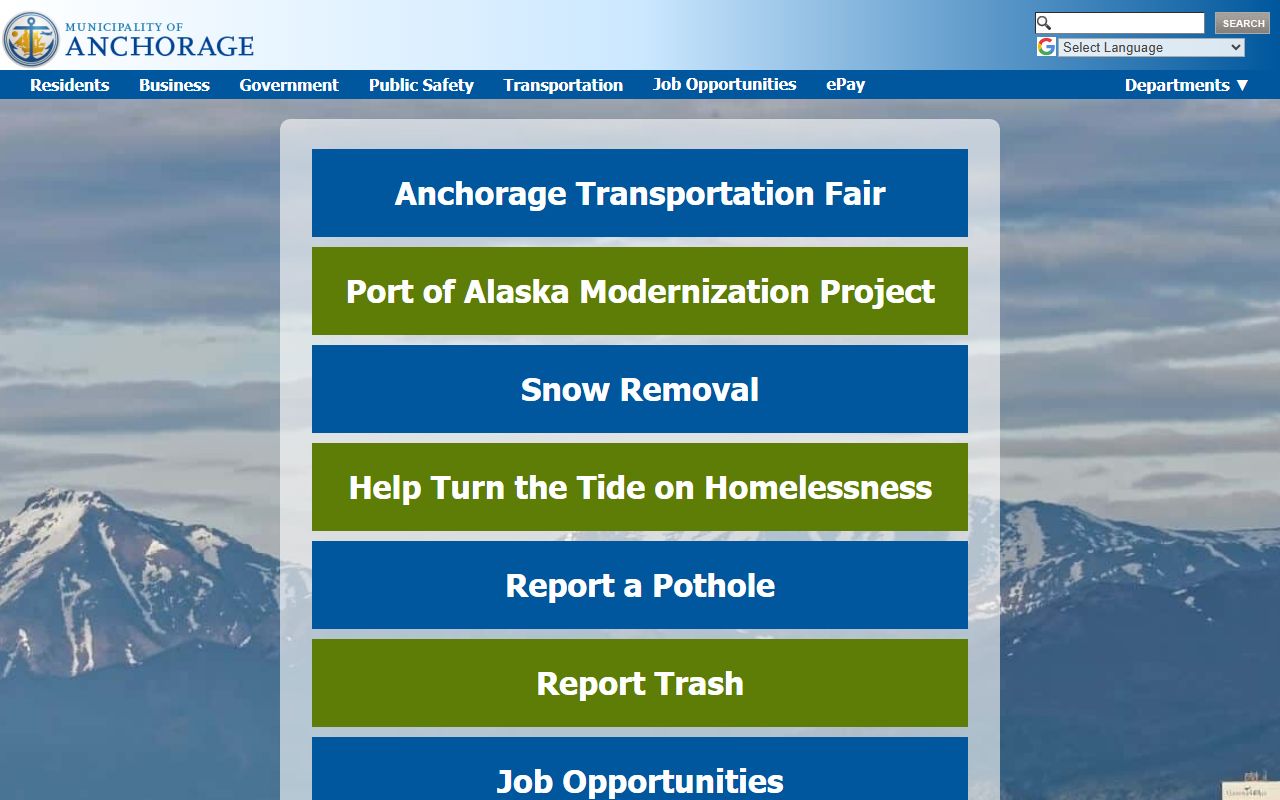
It can help you confirm which department owns the record before you move to the state claim portal.
Anchorage Police Property Claims
Many Anchorage residents run into unclaimed money through found property or police evidence, not a bank account. The Anchorage Police Department property advertising page at anchoragepolice.com/property-advertising lays out the local rules. Owners have a 30-day claiming period. Finders have 45 days. An indemnity release is required before the property can be returned, and the proceeds go to the Anchorage Metropolitan Police Service Area Fund. That is a local process with its own rules, so do not assume a state unclaimed property claim will cover it.
The evidence and property contact is the Anchorage Police Department at anchoragepolice.com. The research gives the phone number as (907) 786-8660, the address as 4501 Elmore Road, Anchorage, AK 99507, and notes that an appointment is required. That tells you the office is still very much active, but it also means you need to plan ahead. When the property is sitting in police custody, the office will want proof that ties you to the item or to the claim right away.
Before you go in, keep the file tight. The more clearly you can tie yourself to the property, the less time the office spends guessing. If the item was seized, found, or logged by APD, a report number, receipt, or other proof can make the difference between a clean return and a second trip. Anchorage is a big city, but the property desk still works from the details in front of it, not from general statements.
- Photo ID
- Case, report, or claim number
- Any receipt or proof of ownership
- Current mailing address and phone number
- Any release form the office asks you to sign
The Anchorage Police Department site at anchoragepolice.com is the right local source when an Anchorage unclaimed money question turns into a property claim.

It gives you the department context you need before you request an appointment or ask for the file to be reviewed.
Anchorage Unclaimed Money Treasury and City Records
Not every Anchorage unclaimed money problem comes from state custody or police property. The municipal treasury side may have information about property tax payments, business license fees, municipal revenues, and unclaimed excess proceeds from tax sales. That matters because a refund, rebate, or overpayment can sit in a local file long after the person who paid it has moved. If your search starts with a city bill or a payment to Anchorage, Treasury is often a better lead than a broad web search.
The Anchorage GIS viewer at muniorg.maps.arcgis.com can help when the record depends on a parcel, address, or service area. That kind of local map is useful if you know the place but not the paper trail. It can also help you match an old mailing address to the right part of the municipality, which saves time when you are trying to figure out whether the city still has the record or whether the state already took it.
Anchorage's unified structure means city and borough functions overlap. A single claim can touch a police desk, a Treasury contact, and a state portal before it is done. That is normal, and it is why Anchorage residents should keep both levels in mind. Start with the simplest office that matches the source, then move upward if the office says the property has already been transferred or archived.
The Anchorage GIS viewer at muniorg.maps.arcgis.com is useful when an Anchorage unclaimed money search depends on an address, parcel, or tax area.

It gives the local context that can connect a city bill, an old address, or a land-related record to the right office.
Anchorage Unclaimed Money Law
Anchorage residents follow Alaska law for unclaimed money, and the law is the same whether the money began with a city account or a statewide holder. The main statute is AS 34.45, and the 2023 amendments are in Senate Bill 231. Those sources explain when property is presumed abandoned and how long holders must keep it before transfer. General intangible property is now three years. Wages and utility deposits are one year. Safe deposit box contents are one year. Bank deposits and stock-related property are generally five years. Life insurance proceeds are generally three years.
That legal timing matters for Anchorage because not every record ages the same way. A payroll check, a savings account, and an old insurance payout can move on very different clocks. The Alaska program also lets rightful owners claim property indefinitely, so the state keeps custody until the owner or heir comes forward. NAUPA's Alaska page at unclaimed.org/reporting/alaska is a useful cross-check for the current contact and filing details. That is a strong rule for people who lost track of an address years ago and are trying to reconnect with an old account now.
If you want to dig deeper, the official contact page and the Treasury Division homepage are the cleanest state links to use. The program is managed by the Alaska Department of Revenue, Treasury Division, not by a local borough office. For national cross-checking, MissingMoney is still useful, and the FDIC directory helps if the money came from a failed bank or another financial institution. If the issue is federal court money, the U.S. Bankruptcy Court for the District of Alaska has its own application path.
The Anchorage Police property advertising page at anchoragepolice.com/property-advertising is the best local source when your Anchorage unclaimed money question is really a police property claim.
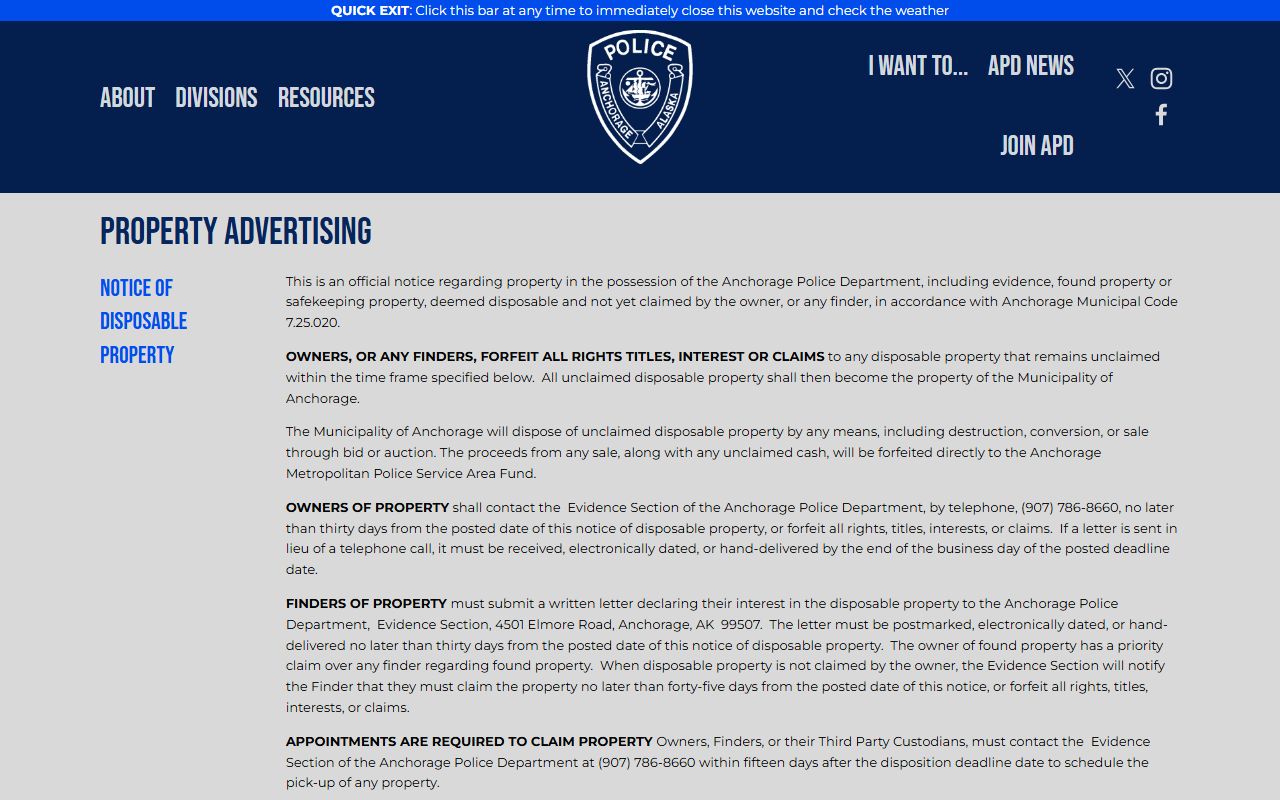
It lays out the owner and finder timelines so you can tell whether the next step belongs with APD or the Alaska Treasury Division.
Anchorage Unclaimed Money Claim Steps
Once you find a match, keep the claim simple and go in order. The Alaska portal lets you start online, upload documents, and track the claim with a number. That is the fastest path for a lot of Anchorage residents because it keeps the paperwork in one place. If the portal asks for a response to emailed instructions, do not let the file sit. The 90-day clock starts when those instructions arrive, and a clean answer on time is much better than a rushed answer with missing papers.
The next step is to match the office to the money. If the source is a city refund, use the municipality. If the source is evidence or found property, use APD. If the source is a bank or another holder that already sent the money to the state, use the Alaska portal. The best claim file is the one that points to the right office from the start. That keeps Anchorage searches focused and makes the record easier to verify.
You can usually narrow the claim with a few basic items before you submit anything. The exact list changes by claim type, but the following papers are the ones people in Anchorage most often need in some form:
- Signed claim form
- Photo ID
- Proof of current address
- Death certificate or probate papers for an heir claim
- Any city, police, or bank record that ties the claim to Anchorage
If you are still not sure which office has the record, start with the Alaska Department of Revenue contact page and ask whether the file is still local or already in state custody. That is a better move than guessing. Anchorage has enough local offices and record paths that a short call can save you a long search.
The official claim search at unclaimedproperty.alaska.gov/app/claim-search and the national MissingMoney database are the two searches most Anchorage residents should check first.
Both are free, and both can show whether the next move belongs with a local Anchorage office or the state claim system.