
Anchorage Municipality Unclaimed Money
Anchorage residents looking for unclaimed money should start with the Alaska Department of Revenue, but local city offices still matter when the money or property came from Anchorage business, police, or tax records. The Municipality of Anchorage, Anchorage Police, and the city treasury side can point you toward property holds, tax-sale proceeds, or files tied to a local account. If you are checking your own name, a business name, or an old mailing address, the state portal and MissingMoney give the fastest first pass. This page brings those Anchorage steps together so you can see where to look and which office to call next.
Anchorage Municipality Unclaimed Money Search
Alaska handles unclaimed money at the state level through the Department of Revenue, Treasury Division, so the main search still begins at Alaska Unclaimed Property. The claim search portal at claim-search lets you look up a last name or business name, review the property details, and start a claim when something matches. If you want a second pass, MissingMoney is the national search Alaska uses too, so it can help you find a record that was tied to a past Anchorage address or a business you closed years ago.
The state portal also lets claimants upload documents. That matters because unclaimed money claims are not just a name match. The state may ask for a government ID, proof of address, a signed claim form, or probate papers for an heir claim. After emailed instructions go out, you generally have 90 days to respond with the needed files. Alaska also holds rightful owner claims indefinitely, so an old Anchorage account does not expire just because the money has been sitting for a long time. That is useful when you are tracing a long trail of wages, deposits, or a refund from a closed account.
Anchorage makes sense as a local search point because many records here run through municipal offices, even when the claim itself belongs to the state. The Municipality of Anchorage website at muni.org is a good entry point when you need the right department name, a current phone number, or a local record path. If the money came from a city payment, a refund, or a municipal transaction, Anchorage staff may be able to tell you which office handled it. When the source is not clear, start with the state search, then move to the local office that owns the record trail.
The Municipality of Anchorage site at muni.org is the main local entry point when an Anchorage unclaimed money question turns on a city account or a municipal record.
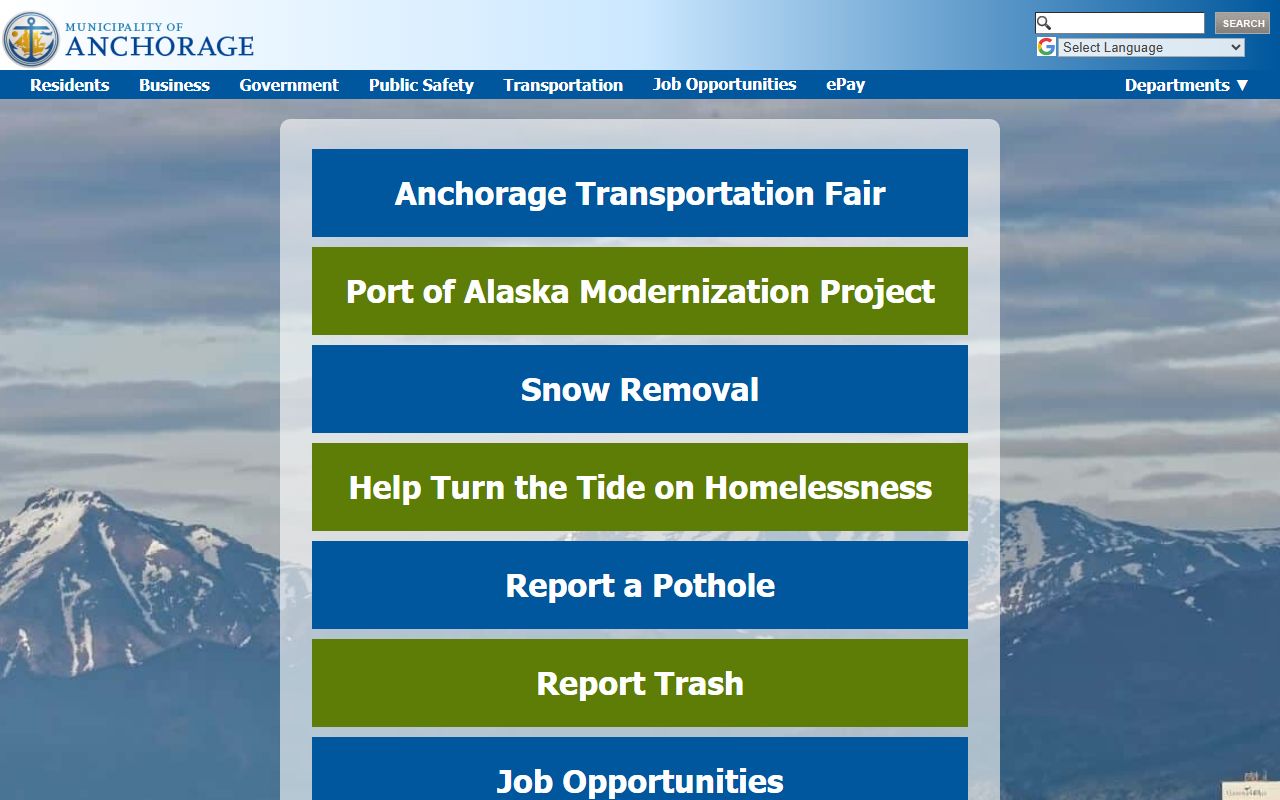
That page helps you confirm the right department before you call, which can save time when the record is split between the city and the state.
Anchorage Municipality Property Claims
Anchorage Police handles found property and evidence through its property advertising and evidence process. The property page at anchoragepolice.com/property-advertising is where the local claim rules show up most clearly. Owners have a 30-day claiming period, while finders have 45 days. A claimant also needs an indemnity release before property comes back, and Anchorage Police says the proceeds go to the Anchorage Metropolitan Police Service Area Fund. That makes the local process different from the state unclaimed money search, even though both paths can matter on the same case.
The evidence and property contact is Anchorage Police Department, and the research lists the phone number as (907) 786-8660 with the location at 4501 Elmore Road, Anchorage, AK 99507. An appointment is required. That is important because you do not just walk in and take property off a shelf. You need a clear connection to the item or funds, and you should be ready to explain why the property belongs to you. If the claim involves cash, a receipt, or a seized item that later became available, the department may have the paper trail you need before anything moves to the state search.
The best way to prepare for an Anchorage Police property visit is to keep your proof tight and plain. Bring the basics that tie you to the item, the case, or the original owner record. If you are a finder, the rules are different, so do not assume the same papers will work. The office can tell you what fits the file, but you save time when you walk in with the right identification and claim details already in order.
- Government-issued photo ID
- Claim number or case reference, if you have one
- Any receipt, report, or ownership record that links you to the property
- A clear mailing address and phone number
- Any release form or indemnity paperwork the office asks for
The Anchorage Police Department page at anchoragepolice.com is the best place to check when a local Anchorage unclaimed money claim sits with police property instead of the state.

It helps confirm that the right office is involved before you make an appointment or gather release papers.
Anchorage Municipality Treasury and Tax Sales
Not every Anchorage unclaimed money problem starts with police or the state claim portal. The Municipality of Anchorage Treasury side may have information about municipal revenues, property tax payments, business license fees, and even unclaimed excess proceeds from tax sales. That is the kind of record that can hide behind a short note or a refund that never reached the right address. When the money came from a city transaction, the Treasury Division is often the place to start before you decide the claim belongs at the state level.
The municipal GIS viewer at Anchorage GIS can help when a parcel, tax area, or address matters more than the name on the check. That is useful for local research because a lot of Anchorage records are tied to land, boundaries, and service areas. If you know the neighborhood but not the office, a parcel view can help you narrow the trail before you call. It does not replace the state portal, but it can make the local side much easier to sort out.
Anchorage is also a unified municipality, so city and borough functions overlap in a way that can feel messy at first. That is normal. If a money trail begins with a local bill, refund, or sale, you may need both the municipal website and the state claim search. Start with the record source you know. Then move to the state system if the office says the property was turned over or if the claim no longer sits with the city.
The Anchorage GIS viewer at muniorg.maps.arcgis.com can help when an Anchorage unclaimed money issue is tied to a parcel, a tax area, or a local address history.

It is a practical cross-check when you are trying to match an old mailing address or property location to the right municipal file.
Anchorage Unclaimed Money Law
Anchorage unclaimed money follows Alaska law, not a local codebook. The main law is AS 34.45, and the 2023 changes are in Senate Bill 231. Those rules matter because they explain when property is presumed abandoned and when a holder has to turn it over. General intangible property is now presumed abandoned after three years. Wages and utility deposits are generally one year. Safe deposit box contents are one year. Bank deposits and stock-related property are generally five years. Life insurance proceeds are generally three years. The details matter because one type of Anchorage claim may age out faster than another.
The law also says owners can claim property indefinitely. That means the money stays available even after the state takes custody. For Anchorage residents, that is a big deal because old accounts often show up long after the last contact with the holder. Alaska also requires holders to report through the Treasury Division, and the program uses NAUPA rules for electronic reporting when enough properties are involved. The Alaska page at unclaimed.org/reporting/alaska is a useful cross-check for the current contact and reporting details. The result is a statewide system with one legal path, even though the source of the money may be local.
If you want to see the program from the state side, use the Treasury Division homepage at treasury.dor.alaska.gov and the official contact page at unclaimedproperty.alaska.gov/app/contact-us. Those pages give you the current contact points for the Alaska Department of Revenue, Treasury Division, which is the agency that actually runs unclaimed property for Anchorage and the rest of Alaska. That is the cleanest way to separate state custody from a local property hold or a municipal refund.
The Anchorage Police property advertising page at anchoragepolice.com/property-advertising is the best local source when you need the city-side rules for found property, release forms, and hold periods.
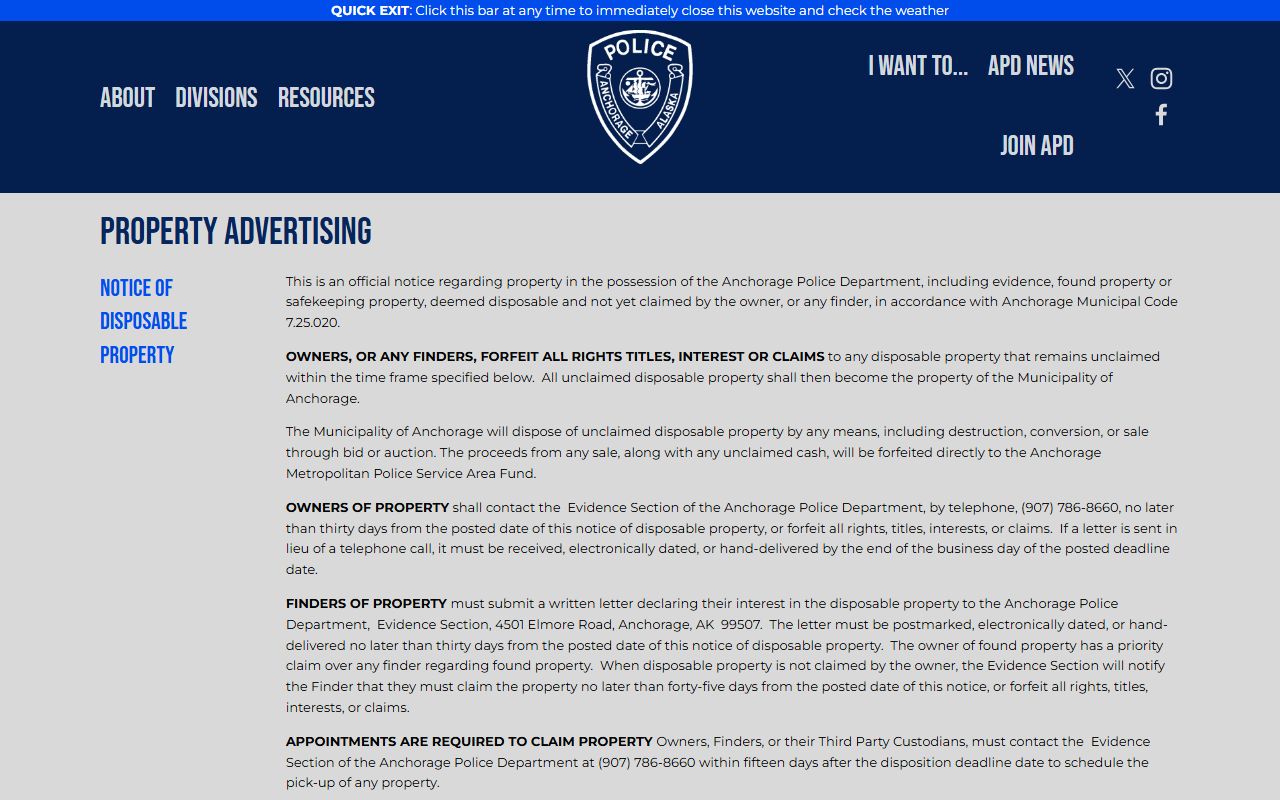
It helps separate a local Anchorage Police property claim from a state unclaimed money claim before you send papers to the wrong office.
Claiming Anchorage Unclaimed Money
When you are ready to claim Anchorage unclaimed money, keep the path simple. Start with the state claim portal, match the property, and then upload the documents the portal asks for. The Alaska system can accept signed claim forms, government ID, address proof, death certificates for heir claims, and probate papers for estate claims. It also gives you a claim number so you can track the file later. That helps when the record belongs to a long-closed Anchorage account and the holder has already sent the money to the state.
After emailed instructions go out, you generally have 90 days to respond. That window is long enough to gather papers, but it is still easy to miss if you set the file aside. If the property is tied to a bank failure or a court case, you may need a different office. For federal court funds, the U.S. Bankruptcy Court for the District of Alaska explains the unclaimed funds process. For bank failures, the FDIC state directory points you back to the Alaska program. Those pages are useful when the Anchorage claim did not begin with a city office at all.
Here is the short version of what to keep nearby before you submit a claim:
- Signed claim form
- Government-issued photo ID
- Proof of current address
- Death certificate or probate papers, if you are claiming as an heir or representative
- Any Anchorage Police or municipal record that explains where the money came from
If you still cannot tell whether the money belongs to Anchorage, the state, or a federal office, call the Alaska Department of Revenue at the numbers listed on the contact page and ask which record path fits your file. That is the fastest way to keep your search focused. It is also the safest way to avoid sending the wrong documents to the wrong office when one Anchorage account touches more than one agency.