
Find Hoonah-Angoon Unclaimed Money
Hoonah-Angoon Census Area unclaimed money searches usually begin and end with Alaska's state system because local online resources are limited. That makes the state claim search, MissingMoney, and the Treasury Division the first places to check when you have only a name or a past address. The web trail here is thin, so the safest move is to search the statewide tools before you spend time looking for a local office that may not have a clear public page. If you are checking your own record, a family name, or a small business name, the Alaska claim portal gives you the best shot at a fast match.
Hoonah-Angoon Unclaimed Money Search
The official search starts at Alaska Unclaimed Property, where the Treasury Division keeps the statewide claim file. The claim search page at unclaimedproperty.alaska.gov/app/claim-search lets you search by last name or business name, review the property detail, and open a claim if the record fits. If you want a second pass, MissingMoney is also worth a look because Alaska reports data there too. That can help when an old Hoonah-Angoon address or a prior business name is the only thing you remember.
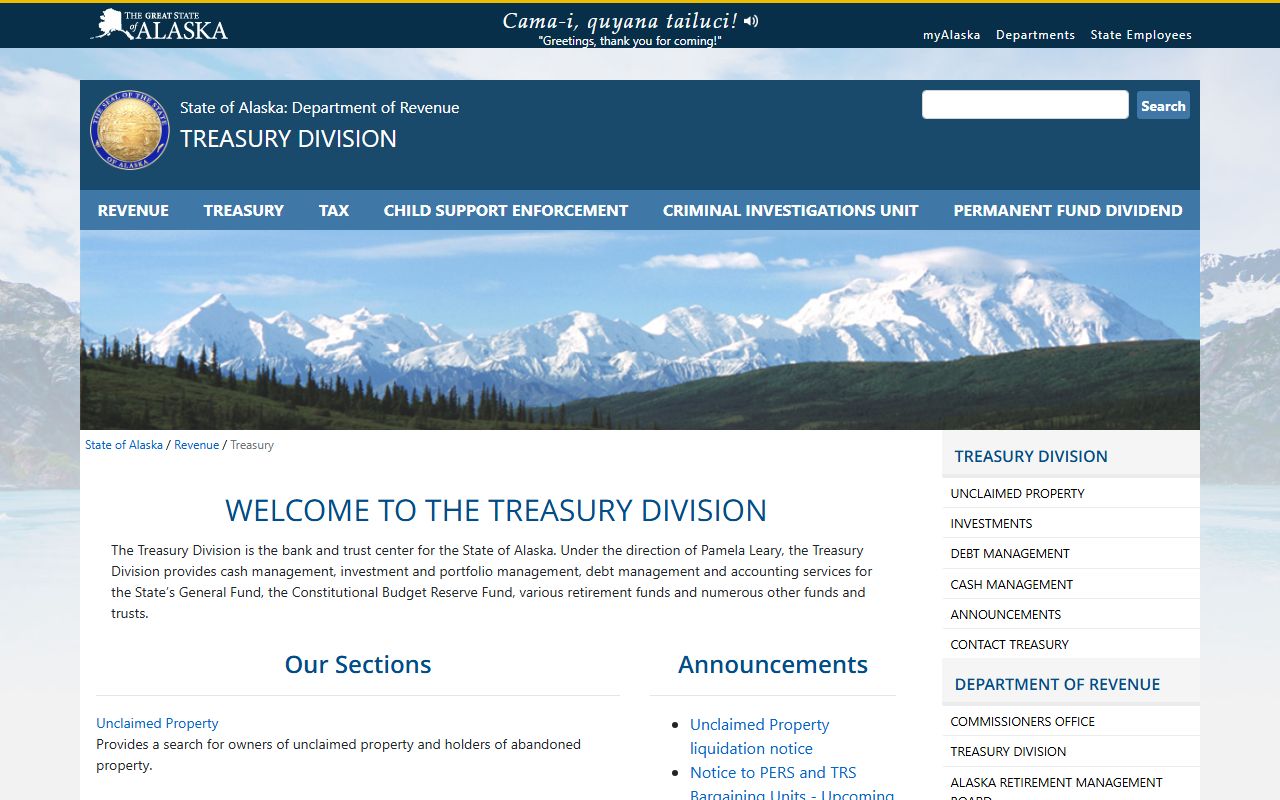
The Treasury Division homepage at treasury.dor.alaska.gov and the contact page at unclaimedproperty.alaska.gov/app/contact-us are the best official follow-up sources if the portal asks for more proof or if you need the mailing address and phone number for the program. Alaska handles unclaimed property centrally, so the claim path does not depend on a local borough office. That is useful in Hoonah-Angoon because the local online trail is not as deep as it is in larger places.
Keep the search broad at first. Use first and last names, maiden names, former business names, and old mailing addresses if you know them. The portal is built for that kind of search, and it can still find a record when the claim came from a quiet account or a short-lived business that sat far from the main road of normal bank activity. In a place with limited online resources, the statewide tools matter more than guesswork.
The Alaska claim search page at unclaimedproperty.alaska.gov/app/claim-search is the best first stop when a Hoonah-Angoon unclaimed money lead starts with a name and no local office.
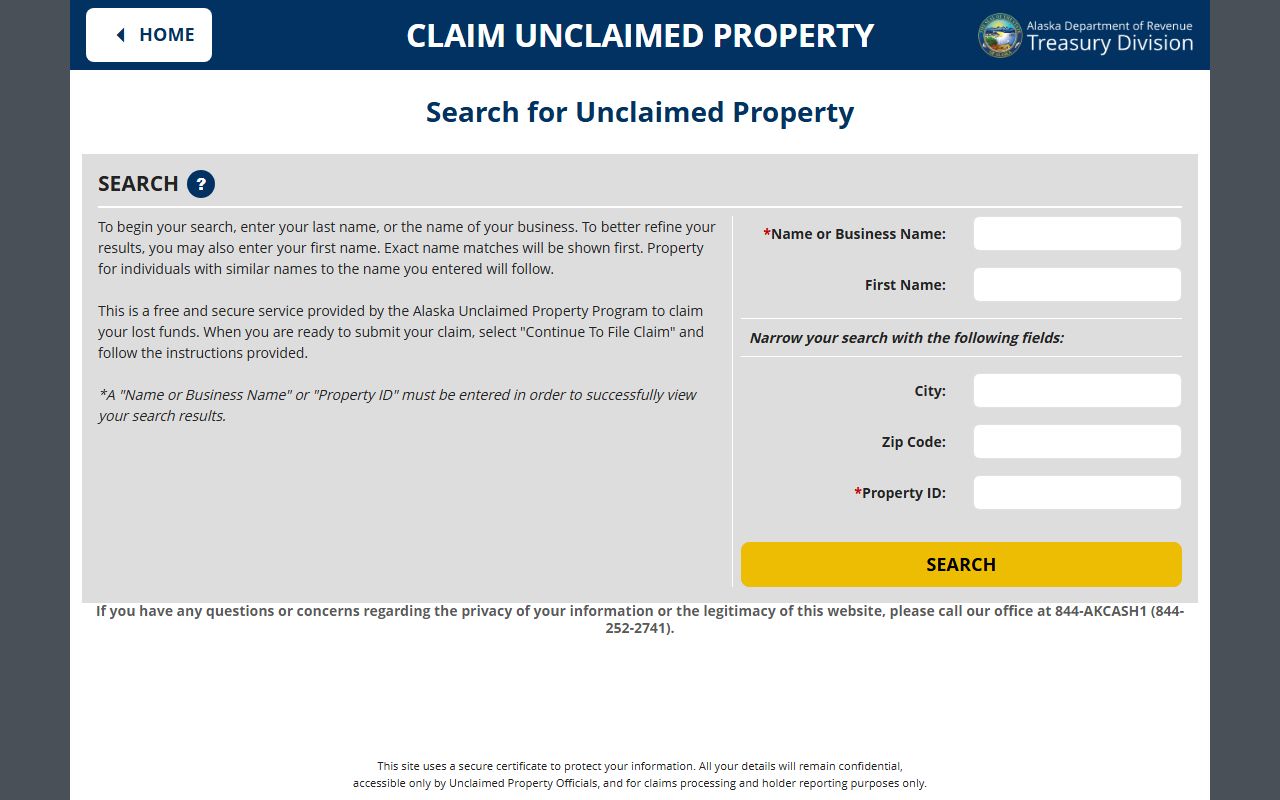
It gives you a direct route into the state claim file, which is the cleanest way to test a match before you chase any local paper trail.
Hoonah-Angoon Local Records
Hoonah-Angoon does not surface a separate county-style unclaimed property office in the research, and that is part of the point. The area depends on state-level handling, so you should not expect a local desk that mirrors the Alaska Treasury Division. If a record clue does show up in land or title materials, the Alaska Department of Natural Resources Recorder's Office at dnr.alaska.gov/ssd/recoff/ is the official state record path to keep in mind. That is the right place to read a recorder trail before you move back to the claim portal.
For Hoonah-Angoon, the key is not a big local office map. It is the small set of state sources that actually run the program. That means the Treasury Division homepage, the contact page, and the claim search are more important than any broad web search for city or borough pages. When online resources are thin, the best approach is simple. Use the state portal first, then use the DNR recorder page only if the clue comes from land, a deed, or another recorded file.
The Alaska contact page at unclaimedproperty.alaska.gov/app/contact-us is the place to check when a file needs a name, a number, or a mailing address from the program itself.
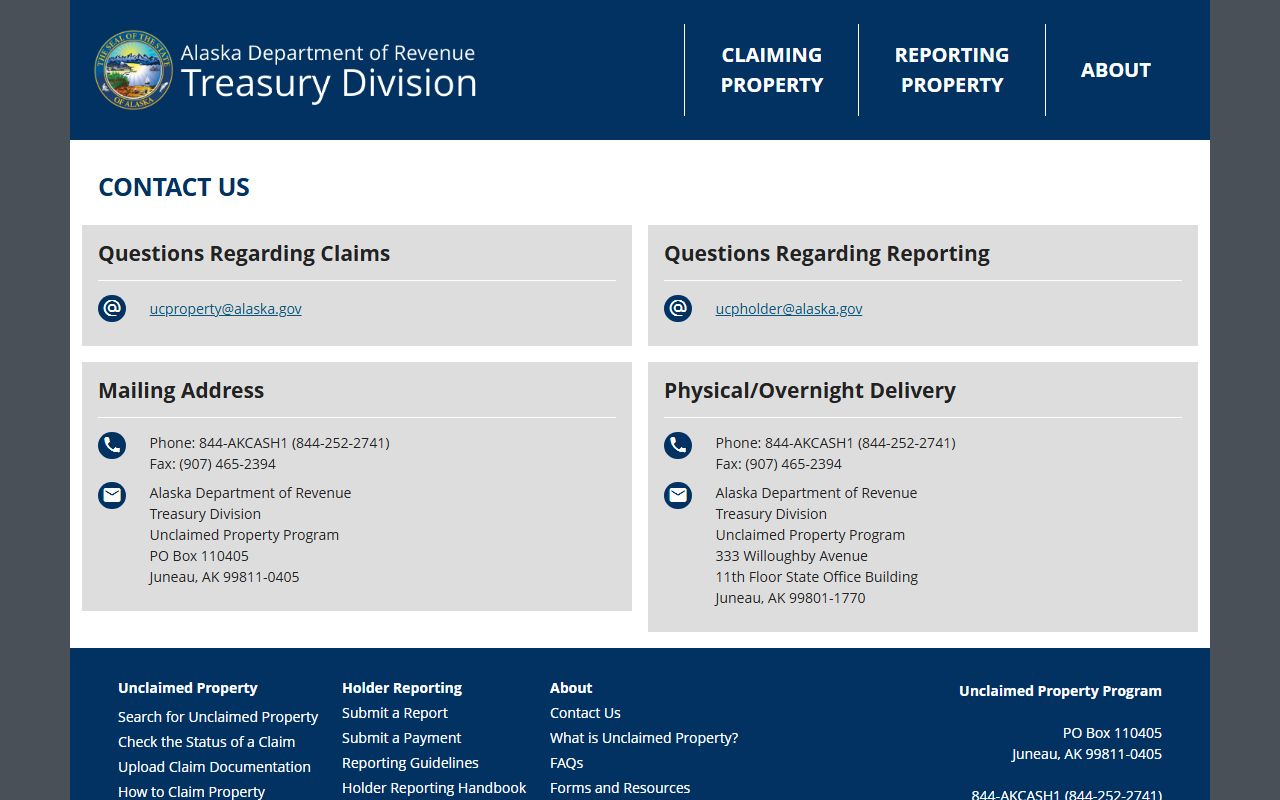
That page helps when you need to ask a direct program question instead of guessing which local office might have held the money.
Hoonah-Angoon Unclaimed Money Law
The legal rule set for Hoonah-Angoon unclaimed money is the same Alaska law that governs the rest of the state. The main page is AS 34.45, and the 2023 update appears in Senate Bill 231. Those sources explain when property is treated as abandoned and when holders have to send it to the state. For general intangible property, the dormancy period is three years now. That is a big change from the older rule and one reason old checks, balances, and account leftovers can move to Alaska faster than people expect.
The law also protects the owner. Alaska says a rightful owner can claim the property indefinitely, which matters for heirs, people who moved away, and anyone who lost track of a name years ago. The Treasury Division still keeps custody until the claim is proved. That means the search can stay open long after the first paper trail went cold. The Alaska law page makes the rule clear, and the Treasury page shows the office that puts the rule to work.
If you want a national check on the state's reporting system, the Alaska NAUPA page at unclaimed.org/reporting/alaska is a solid companion source. It shows that Alaska follows the national unclaimed property reporting model and uses the same broad framework that holder reports across the country depend on. That is helpful when the local trail is thin and you want one more high-authority source to confirm the path.
Claiming Hoonah-Angoon Unclaimed Money
Once you find a possible match, the Alaska claim portal lets you start the file, upload the needed papers, and follow the claim number after submission. The claim system can ask for a signed claim form, a government ID, proof of current address, and, if the owner has died, a death certificate or probate document. That is not a heavy lift if you stay organized. It just takes clean proof that ties you to the name in the file.
After emailed instructions are sent, claimants generally have 90 days to respond with the right documents. That deadline is long enough to gather papers, but it is short enough to lose if the claim sits in a draft folder. If the money came from a failed bank or a court file, use the proper official source before you file. The FDIC state directory points back to Alaska for bank failure money, and the U.S. Bankruptcy Court for the District of Alaska handles court unclaimed funds. Those sources keep the path official when the claim did not start with the state portal.
That is the simplest way to work a Hoonah-Angoon file. Use the state search. Use the contact page if the portal needs help. Use the court or FDIC source if the money came from a different system. The claim stays open, and the state keeps the file until the owner or heir proves the match.
The Alaska Department of Revenue contact page at unclaimedproperty.alaska.gov/app/contact-us is the best place to confirm the current details for the Hoonah-Angoon unclaimed money program.
That office is the real home of the claim process, so it is the right source when a local search turns back toward the state.
More Hoonah-Angoon Sources
If the Hoonah-Angoon file still needs one more look, the best official sources are still the same ones the state uses for the claim path. The portal at unclaimedproperty.alaska.gov, the claim search page at unclaimedproperty.alaska.gov/app/claim-search, and the Treasury Division homepage at treasury.dor.alaska.gov give you the program, the search box, and the office behind it. That is enough to stay on track without drifting into weak or low-value web pages.
Because online resources are limited in this census area, it helps to search both old and current names. Try a family name, a business name, or a place name tied to the last address you know. If a land clue is involved, keep the DNR recorder page close. If the money came from a bank failure or a court file, use the FDIC or bankruptcy court source instead. The state system still handles the final claim, no matter which clue got you there first.
The Alaska NAUPA page at unclaimed.org/reporting/alaska and the Alaska law page at unclaimedproperty.alaska.gov/app/ucp-law are the last two official checks worth keeping nearby. They make the reporting side and the legal side easy to confirm if you want the claim path fully tied down before you file.