
Search Lake and Peninsula Borough Unclaimed Money
Lake and Peninsula Borough unclaimed money searches work best when you start with Alaska's state portal and then use the DNR recorder trail to narrow the source. The borough's property records run through the Alaska Department of Natural Resources Recorder's Office, and the online path is limited enough that you should expect a state-first search. That does not make the borough less important. It just means the local clue is more likely to come from a recorder entry, an old address, or a name that appears in a state file before it appears anywhere else. Start with the Alaska database, then follow the land-record trail when the source is not obvious.
Lake and Peninsula Borough Unclaimed Money Search
The official Alaska search starts at Alaska Unclaimed Property. That portal is where Lake and Peninsula Borough residents can look for bank balances, refunds, deposits, insurance funds, and other property that has already moved into state custody. The claim search at unclaimedproperty.alaska.gov/app/claim-search lets you search by last name or business name, review the property details, and open a claim when the record matches. If the first pass is thin, MissingMoney gives you a second check that can catch a spelling change or an older business name.
That state search is especially important in a borough with limited online availability. A lot of Lake and Peninsula searches begin with a remembered place or a rough family name, not a clear file number. The portal helps by showing the last known address, the holder, and the property type. If that information lines up with the borough, you have a path. If it does not, the local recorder context below can help you separate a land record from a pure money claim. Either way, the search stays focused on official Alaska sources instead of random web results.
For the state side, use the Treasury Division homepage at treasury.dor.alaska.gov and the contact page at unclaimedproperty.alaska.gov/app/contact-us. Those pages give you the Alaska Department of Revenue contact path that runs the program for the whole borough. If your file needs a status check, an upload fix, or a follow-up after emailed instructions, those are the pages to use first. They keep the claim in the right system and prevent a long detour through a local office that does not hold the money.
Lake and Peninsula Borough Recorder Records
Lake and Peninsula Borough property records go through the Alaska Department of Natural Resources Recorder's Office. That is the most useful local fact for this borough because it tells you where the paper trail lives when there is no strong borough-run online property search to lean on. The recorder page at dnr.alaska.gov/ssd/recoff/ is the public entry point for recorded deeds, mortgages, liens, and other land records. If an old property file is the clue, this is where you start. The borough name matters, but the recorder office is the place that actually holds the record path.
That context helps when you are trying to tie an unclaimed money lead to a parcel, a land sale, or a business that once held a local interest. The Alaska recorder system can show whether the file belongs in a recording district first and a claim file second. That matters because a lot of property searches in a sparsely populated borough begin with the land, not the cash. If the record is old, the recorder page is often the clearest way to confirm the source before you move on to the Treasury Division.
The Alaska DNR Recorder's Office page at dnr.alaska.gov/ssd/recoff/ is the best public record anchor when a Lake and Peninsula Borough unclaimed money search starts with a recorded property file.
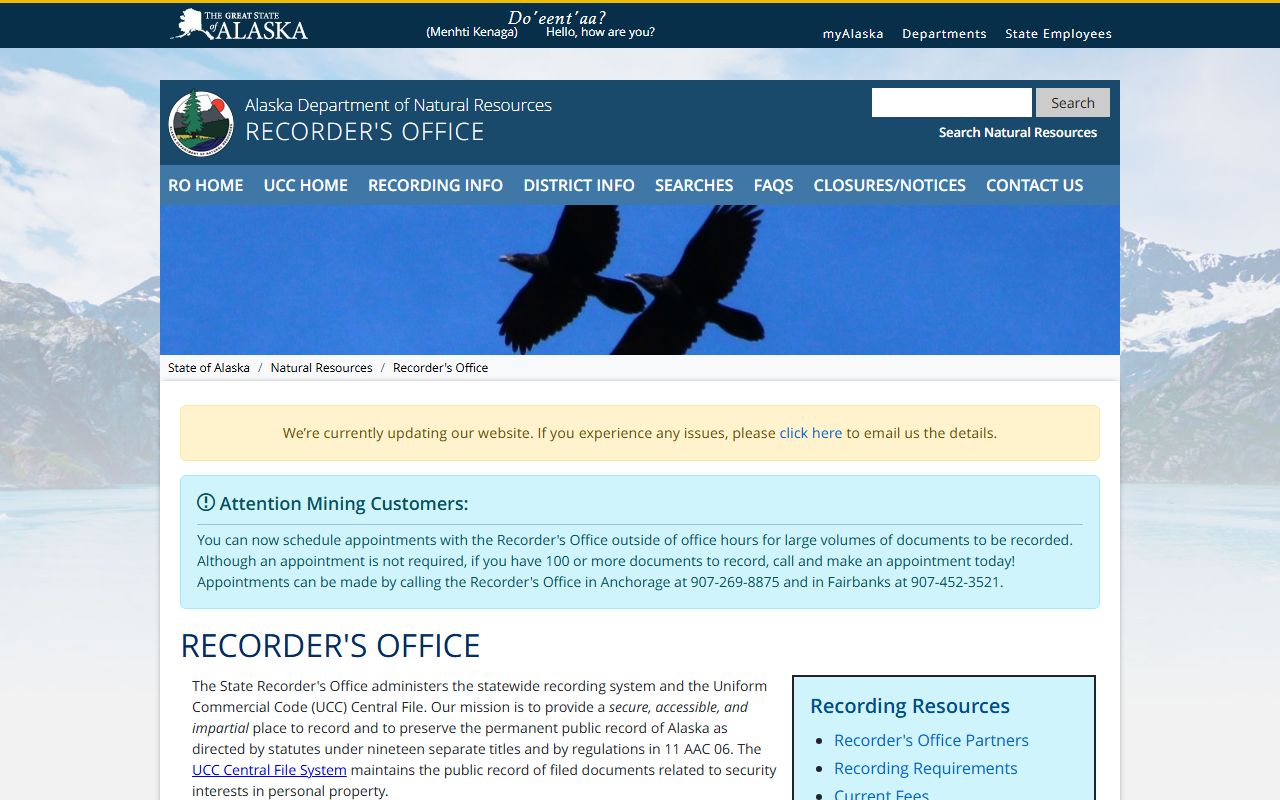
That recorder context helps you decide whether the source is a land record, a holder file, or a state claim that already moved out of the borough trail.
Lake and Peninsula Borough Unclaimed Money Sources
Because Lake and Peninsula Borough has limited online availability, the strongest public tools are still statewide. The Alaska claim portal, MissingMoney, the Treasury Division page, and the Alaska contact page all work together when the local trail is thin. That is not a weakness. It is the normal path for a borough where the record source often sits in state hands. If you know only a last name, an old mailing address, or a former business name, the state database is still the best first pass. From there, the recorder office can help you confirm whether the clue came from a recorded interest.
Lake and Peninsula Borough residents also benefit from the NAUPA Alaska page at unclaimed.org/reporting/alaska. It confirms the state reporting structure and gives another official place to verify how Alaska handles dormant property. That is useful when you want to know whether a holder should already have turned the item over or whether the claim is still sitting with the original source. The same goes for the FDIC state directory, which is the clean route when a failed bank is the source of the money.
If the clue sits in a court file instead of a bank or land record, the U.S. Bankruptcy Court for the District of Alaska gives you the federal path. That is not the normal first stop, but it is the right one when the money came out of a bankruptcy case. Lake and Peninsula Borough searches can be broad, so having the court page, the bank directory, and the Alaska portal all in one search path helps you avoid dead ends.
The official Alaska Unclaimed Property homepage at unclaimedproperty.alaska.gov is the main claim hub when a Lake and Peninsula Borough record moves from the recorder trail into state custody.
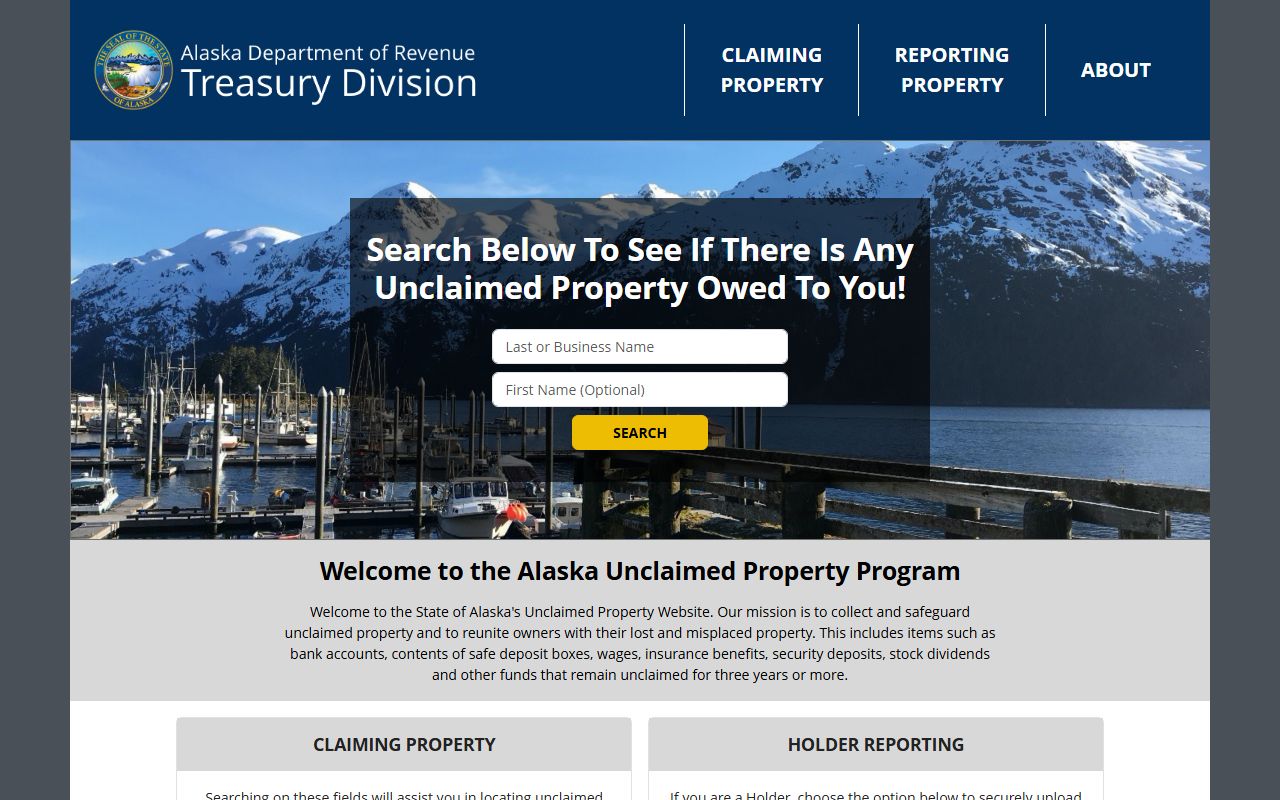
That page is the best place to confirm whether the property has already been turned over and is waiting in the state system.
Lake and Peninsula Borough Unclaimed Money Law
Lake and Peninsula Borough unclaimed money follows Alaska law, and the rule set is the same statewide. The official law page at AS 34.45 explains the Alaska Unclaimed Property Act, while Senate Bill 231 shows the 2023 changes. Those changes matter because general intangible property is now presumed abandoned after three years. Wages and utility deposits are generally one year. Safe deposit box contents are one year. Bank deposits and stock-related property are generally five years. Life insurance proceeds are generally three years.
The law also says rightful owners can claim property indefinitely. That is a strong protection for Lake and Peninsula Borough residents who may not check for old funds every year. Once the state has the money, it stays available until an owner or heir makes a valid claim. The claim portal supports secure document upload, and the process is meant to be tracked, not guessed at. If the portal sends emailed instructions, the claimant generally has 90 days to respond. That timing gives you room to gather proof, but it still rewards a prompt answer.
For state follow-up, the Treasury Division homepage at treasury.dor.alaska.gov and the contact page at unclaimedproperty.alaska.gov/app/contact-us are the right places to verify the office, the mailing address, and the email path. If you are not sure whether the claim belongs to the state or to a federal court file, the Alaska Bankruptcy Court page and the FDIC directory above can help you sort that out before you submit paperwork.
Claiming Lake and Peninsula Borough Unclaimed Money
When you are ready to claim Lake and Peninsula Borough unclaimed money, keep the file simple and direct. Search the Alaska database, compare it with MissingMoney, and then use the recorder trail if the source looks like a property file. The state portal can handle the upload and tracking pieces once you have a match. That is where a government ID, proof of address, a signed claim form, or probate papers for an heir claim can move the file forward. The important thing is matching the record to the right source before you send documents.
Lake and Peninsula Borough searches often hinge on a short clue. A parcel name. A family name. A business name that no longer exists. Those clues are enough if you use the right records. The Alaska claim portal tells you whether the money already sits with the state. The DNR recorder page tells you whether the local trail is really a land record. Together, they narrow the issue fast. That saves time and keeps you from treating a property record like a missing account or a missing account like a property record.
If the claim does not fit the Alaska portal, check the federal and bank sources before you close the file. A bankruptcy case can route through the U.S. Bankruptcy Court for the District of Alaska. A failed bank can route through the FDIC directory. Those official sources are not extra noise. They are the final check that keeps a Lake and Peninsula Borough search accurate when the record source is not obvious from the start.