
Wrangell City and Borough Unclaimed Money
Wrangell City and Borough unclaimed money searches work best when you start local and then move into Alaska's state claim system. Wrangell is a unified city and borough, so one record trail can point to a municipal file, a borough contact, or the state property program. If you are checking an old address, a business name, or a refund that never reached you, begin with the Wrangell official site and the Alaska claim portal. That path keeps the search focused, helps you confirm the right office, and gives you a clean way to gather proof before you file a claim.
Wrangell Unclaimed Money Search
The official Wrangell homepage at wrangell.com is the best local anchor for a Wrangell City and Borough unclaimed money search because it identifies the unified local government that sits behind the record trail. When you are sorting through an old bill, a refund, or a payment that may have drifted out of reach, that local page keeps the search grounded in the right place. It can also save time when you need to tell whether a file began with the city side, the borough side, or a state-held account that already moved out of local hands.
The Alaska program at unclaimedproperty.alaska.gov is the real claim home. From there, the search portal at unclaimedproperty.alaska.gov/app/claim-search lets you look by last name or business name, review the property details, and start the claim if the record matches. That works well for Wrangell because a past mailing address or a small local account can sit under a name that changed years ago. The state system does the heavy lifting, but the local clue still matters. A solid lead from Wrangell can keep you from wasting time on the wrong account.
MissingMoney at www.missingmoney.com is worth checking too. Alaska reports there as well, so the national database can catch a spelling change, a former business name, or a record tied to a prior Wrangell address. If one search result looks thin, the second pass often gives you a better clue. That is especially helpful when the trail is older than the paper you still have at home. In a place like Wrangell, where one local office may cover a wide range of public needs, a broader search can reveal the account faster than a guess.
The key idea is simple. Use Wrangell to anchor the story, then use the Alaska claim search to test the name against the state file. When both sources point the same way, the claim gets much easier to prove and much easier to move forward.
The official Wrangell City and Borough homepage at wrangell.com is the local source for this image and the right place to start when a record trail begins in Wrangell.
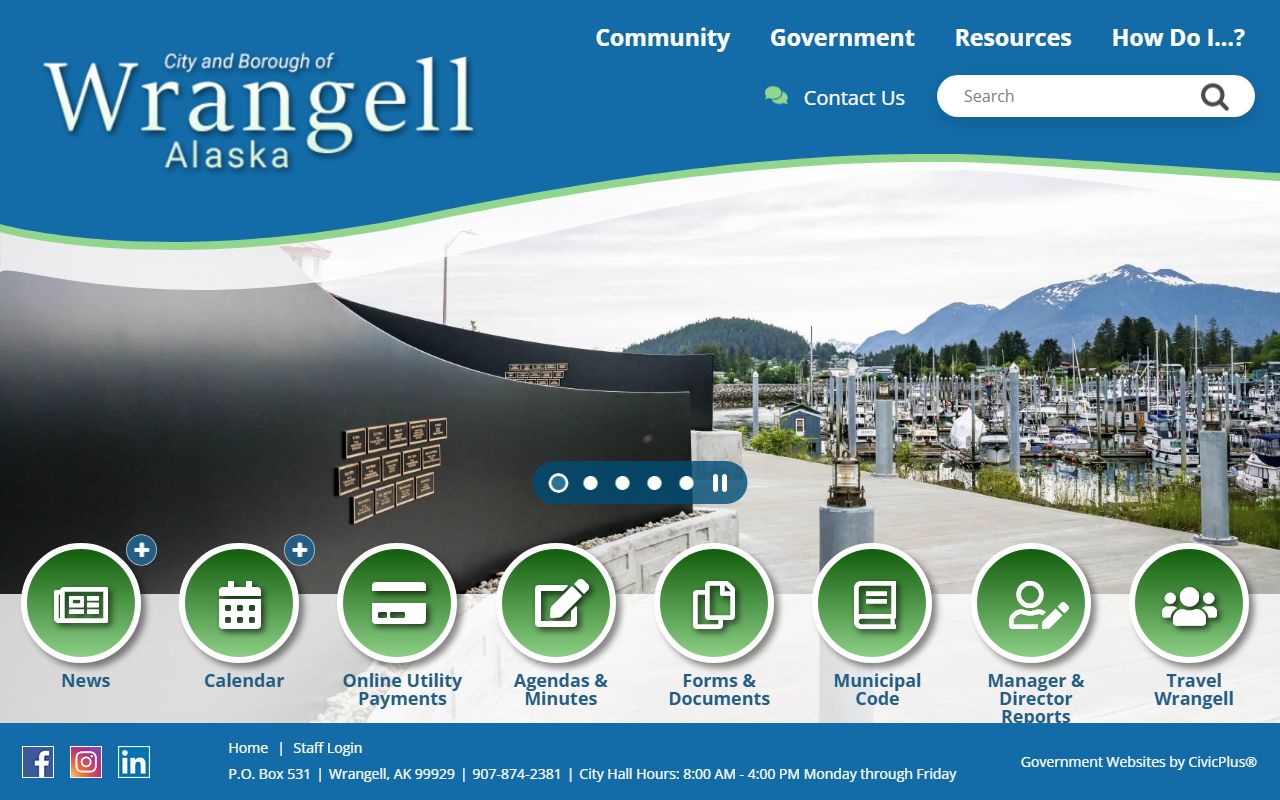
Use the site to confirm the local government structure before you move from a Wrangell clue to the Alaska claim portal.
Wrangell Unclaimed Money Records
Wrangell City and Borough is unified, and that matters when you trace a record. One local government can hold the opening clue, but the recording side follows the state system. Research in this project says Wrangell records tie into the First Judicial District for recording, so the Alaska recording office page at dnr.alaska.gov/ssd/recoff/ is a useful reference when the file is tied to land, a filing, or another recorded document. The goal is not to guess. The goal is to see where the paper trail actually lives.
The state recording office does not replace the unclaimed property program, but it helps explain why a local search can feel split between a city site and a state office. That split is normal in Wrangell. A public record may begin with a borough contact, pass through recording, and later connect to unclaimed money if a holder reports it to Alaska. When that happens, you need both the local context and the state claim path. The Wrangell site shows the local government side, while the state pages show what happens after custody moves to Alaska.
That is also why the Treasury Division homepage at treasury.dor.alaska.gov belongs in the search path. The Treasury Division is the program home for Alaska unclaimed property, and it is the place that explains where the claim process sits inside the Department of Revenue. If the local record is thin, the state page helps you keep the search from drifting. If the local record is strong, it gives you the next step without forcing you to guess which office should answer first.
Wrangell searches are cleaner when you treat the local record and the state record as two parts of one trail. One side shows the source. The other side shows custody. That simple split keeps a Wrangell City and Borough unclaimed money search focused and practical.
Wrangell Unclaimed Money Law
The law page at unclaimedproperty.alaska.gov/app/ucp-law is the most direct way to read Alaska's unclaimed money rules. It covers AS 34.45, which controls how property is reported, held, and returned in Alaska. For Wrangell, that means the local office can point you toward the record, but the state law decides how the claim works. When you want the source rule instead of a summary, that page is the one to open first.
The 2023 update in Senate Bill 231 changed several dormancy periods. In plain terms, many general intangible items now become presumed abandoned after three years. That matters because it brings some claims into the state program sooner than older rules did. It does not end the owner's right to come back later. Alaska says rightful owners can claim property indefinitely, so an old Wrangell account can still be worth filing even if it has sat untouched for years.
The law also helps explain the claim timing for holders. That matters for a city and borough search because a local refund or account may have been sitting with the holder long before it was sent to Alaska. Once it is in the state system, the search portal and law page work together. The law explains the duty to report. The portal handles the owner claim. Wrangell residents who understand that split are less likely to send the wrong papers to the wrong office.
For a practical cross-check, the Alaska contact page at unclaimedproperty.alaska.gov/app/contact-us gives the current program contact details, and the NAUPA Alaska page at unclaimed.org/reporting/alaska/ gives another official source for the state setup. Those pages do not change the rule. They just make the rule easier to use when you are trying to claim Wrangell City and Borough unclaimed money.
Wrangell Unclaimed Money Sources
Wrangell searches should not rely on a single page. The Alaska claim portal at unclaimedproperty.alaska.gov/app/claim-search is the main tool, but other high-authority sources can fill in gaps. MissingMoney at www.missingmoney.com helps when a name, address, or business record changed over time. The national search can catch a match that the local search missed, which is useful when the Wrangell clue is old or the spelling is not exact.
The federal side matters too. If money came from a court case, the U.S. Bankruptcy Court for the District of Alaska explains unclaimed funds at www.akb.uscourts.gov/unclaimed-funds. If a bank failed and the account moved out of the institution, the FDIC directory at www.fdic.gov/bank-failures/unclaimed-property-information-state points back to Alaska's state program. Those sources are important because they keep you from forcing a federal or bank issue into a local municipal box.
The Alaska Treasury Division page at treasury.dor.alaska.gov and the contact page at unclaimedproperty.alaska.gov/app/contact-us round out the state side. Together, they give you the current office path, the mailing details, and the answer to a basic question: who actually runs the program. For Wrangell residents, that answer is still Alaska, even when the original clue came from a local check, a city refund, or a borough record.
When those sources agree, the claim becomes much easier to trust. That is the point of using official links only. Each one narrows the path instead of adding noise. In a Wrangell City and Borough unclaimed money search, clean sources matter more than a broad web search ever will.
Claiming Wrangell Unclaimed Money
Once you find a match, the claim step should stay orderly. The Alaska portal lets you upload documents and track the claim, which helps when you need one place to keep the file moving. Typical support files include a government-issued photo ID, proof of current address, and any record that links you to the old account. If you are claiming for an estate or as an heir, the portal may also ask for probate papers or a death certificate. The goal is to prove the connection, not to overload the file.
Claimants generally have 90 days to respond to emailed instructions from the state. That window is long enough to gather papers, but it is easy to lose if you set the claim aside. A quick response keeps the file alive and avoids a stall that comes from waiting too long to upload what the program asked for. Alaska also lets owners claim property indefinitely, so an old Wrangell record does not disappear just because the account has been dormant for years.
If the local clue came from Wrangell but the state portal does not show a clean match, go back to the source side. The Wrangell official site can help you confirm the local government structure, and the DNR recording office page can help when the trail points to a recorded document in the First Judicial District. That is often enough to tell you whether the claim belongs with Alaska, with a federal office, or with a local record holder. The right office matters more than the fastest office.
For most people, the best path is still the same. Start in Wrangell. Check Alaska. Use the portal to upload proof. Then watch the claim until it is done. That sequence keeps the search narrow and gives you the best chance of recovering Wrangell City and Borough unclaimed money without wasting time on the wrong file.